3 hr
Teotihuacan Hot Air Balloon Flight & Pyramids Tour
- Entry ticket
- Mobile voucher
- Valid same day
- Free cancellation
Hot Air Balloon Mexico City Teotihuacan — Sunrise Flights Over the Pyramids
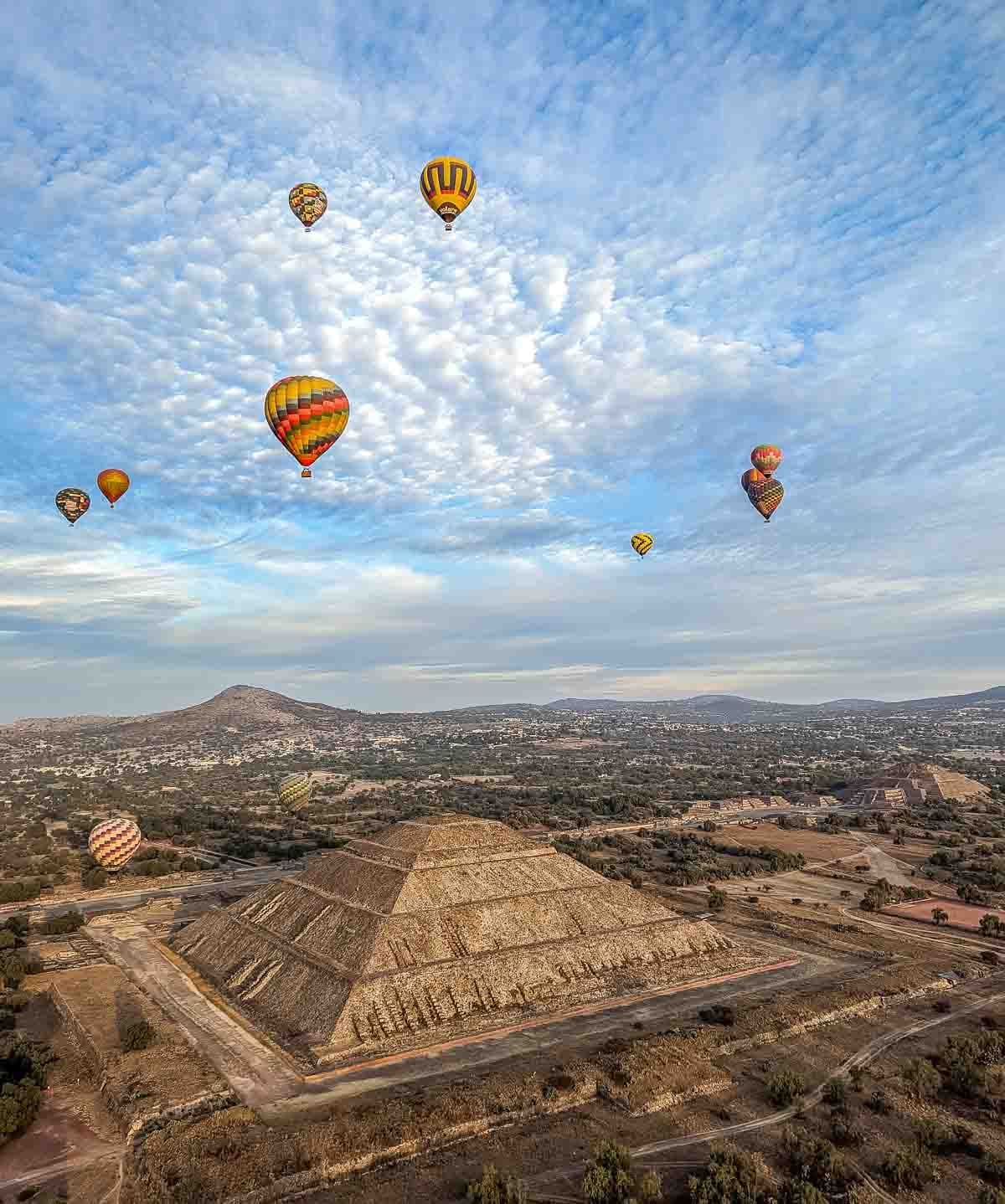
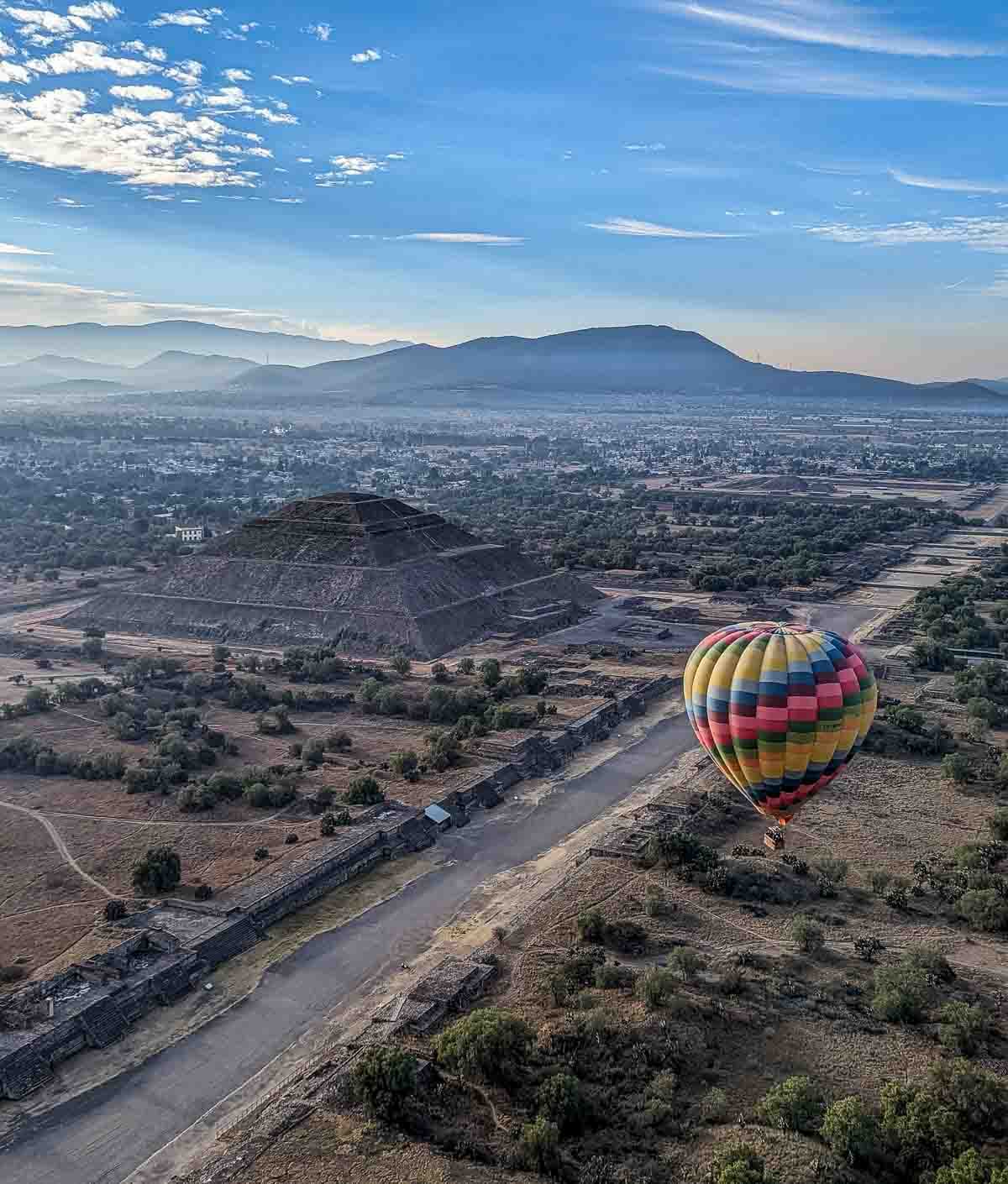
Float above the Avenue of the Dead at dawn, where the Pyramid of the Sun meets silence.
Compare fares, pick the fit — all bookings are mobile-voucher and eligible for free cancellation where shown.
3 hr
11 hr
5 hr
| Experience | Duration | Rating | Pickup | Guide | Small group | Free cancel. | Price | |
|---|---|---|---|---|---|---|---|---|
|
Standard Entry
Most popular
Teotihuacan Hot Air Balloon Flight & Pyramids Tour
|
3 hr | ★ 4.6 | ✓ | ✓ | — | ✓ | €138 | Book → |
|
Guided Experience
Teotihuacan Balloon Flight & Guadalupe Basilica Tour
|
11 hr | ★ 5.0 | — | ✓ | ✓ | ✓ | €234 | Book → |
|
Standard Entry
Teotihuacan Hot Air Balloon Adventure with Breakfast
|
5 hr | ★ 5.0 | ✓ | — | ✓ | ✓ | €85 | Book → |
Worth it for sunrise seekers and photographers
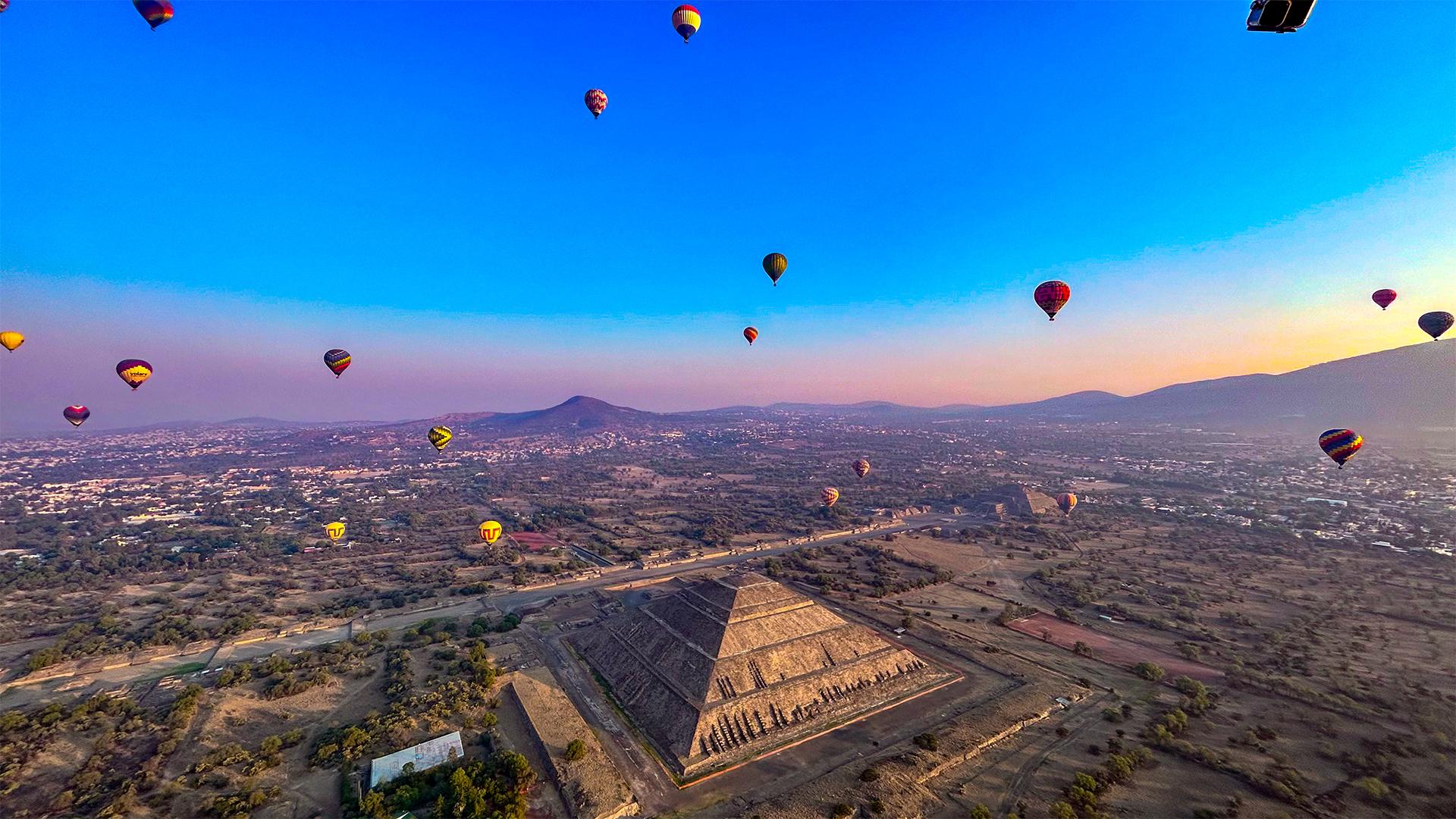
A hot air balloon mexico city teotihuacan flight runs 2,000–3,500 MXN depending on whether breakfast and ground tours are included, versus the 210 MXN site entry fee alone. You're paying 10–15× more for roughly one hour aloft over the Pyramids of the Sun and Moon at dawn, when thermal conditions are ideal and the archaeological zone appears almost deserted from above. The aerial perspective reveals the city's geometric urban planning—the Avenue of the Dead's perfect alignment becomes unmistakable from 300 meters up. Ground exploration lets you climb the pyramids and examine Teotihuacan murals up close, but the balloon offers a vantage point impossible to replicate on foot. Hot air balloon mexico city teotihuacan tours typically launch before the site opens to pedestrian traffic, so you avoid both ground crowds and midday heat. The trade-off: you sacrifice tactile engagement with the stone structures themselves for a sweeping, photogenic overview that contextualizes the entire 20-square-kilometer complex in minutes.
Bottom line: The aerial investment pays off if documenting the site's full scale matters more than climbing the structures themselves.
They complement each other; most visitors who do both call the aerial flight the more thrilling perspective, while the ground tour provides the necessary historical context. This comparison helps you decide if a hot air balloon mexico city teotihuacan tour is the right splurge for your itinerary.
|
Top pick Hot Air Balloon Flight |
Archaeological Walking Tour | |
|---|---|---|
| Best arrival window | 08:00–11:30 | 08:00–11:30 |
| Experience intensity | High (aerial ascent) | Moderate (walking/hiking) |
| Average duration | 4–9 hours total | 2–4 hours |
| Primary perspective | Panoramic aerial views | Ground-level architectural detail |
| Accessibility | Requires physical agility | Varies (ramps available) |
| Entrance fee | 210 MXN (conservation fee) | 210 MXN (conservation fee) |
| Booking constraints | Pre-dawn reservation required | Walk-ins often accepted |
| See tickets & prices |
Verdict: If your budget and alarm clock permit, the hot air balloon mexico city teotihuacan experience offers an unmatched sunrise vantage point that serves as a perfect prelude to an immersive walking tour of the ruins.
Hand-picked experiences loved by thousands of travelers
6.5 hours
Free Cancellation
Float above ancient pyramids at sunrise, toast with sparkling wine, and savor breakfast near the ruins
2 hours
Free Cancellation
Soar above ancient pyramids at dawn and toast your adventure with sparkling wine after landing
4 hours 15 minutes
Free Cancellation
Drift above ancient pyramids at sunrise on an exclusive balloon adventure with champagne toast
6 hours
Free Cancellation
Soar above ancient pyramids at dawn in an exclusive hot air balloon with private transport and breakfast
5 hours 30 minutes
Free Cancellation
Drift above ancient pyramids at sunrise in your own private balloon, then toast with sparkling wine
10 hours
Free Cancellation
Journey through ancient pyramids, sacred shrines, and layered history with authentic barbacoa and local spirits
40 minutes – 3 hours
Free Cancellation
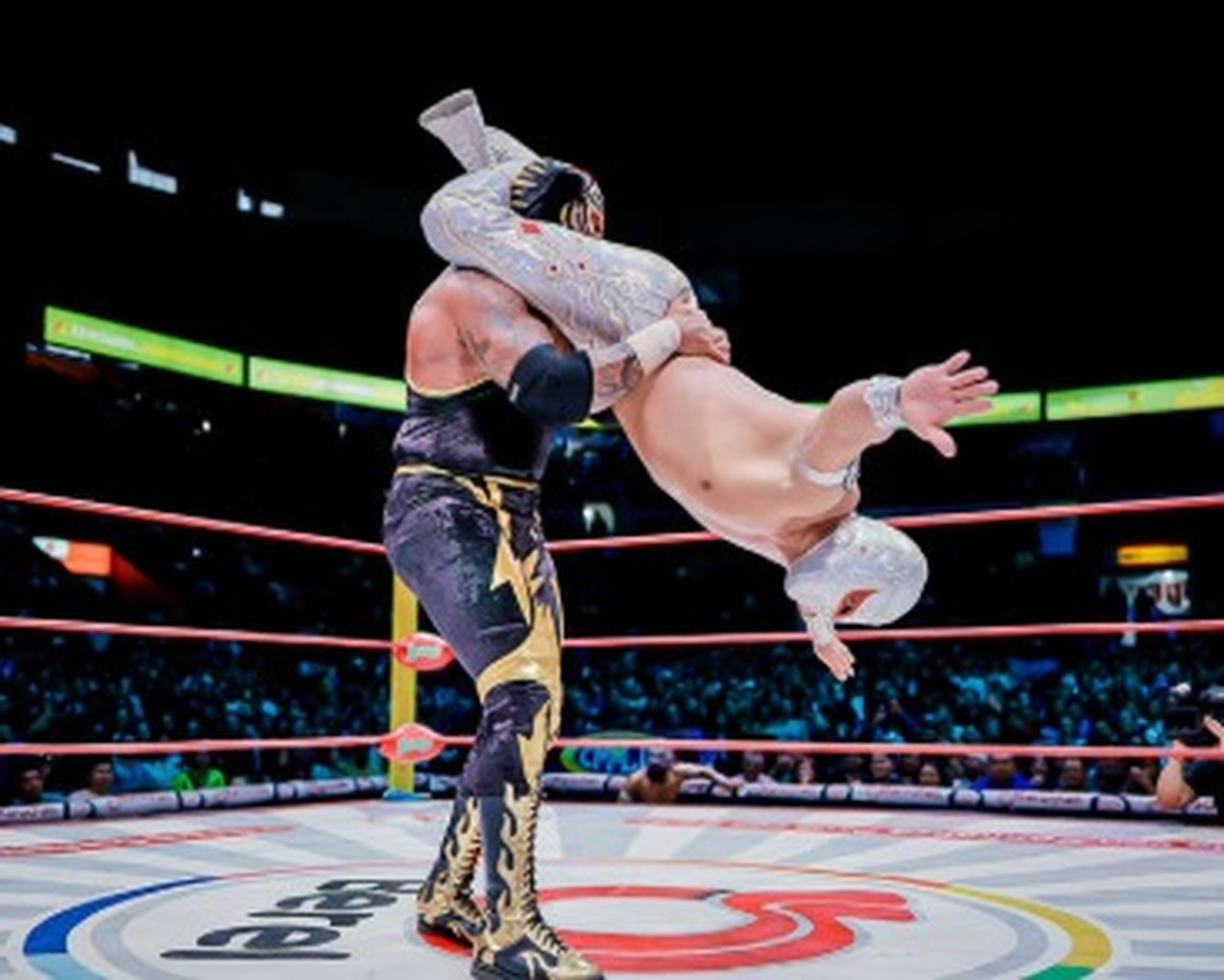
Watch high-flying wrestlers battle it out at a legendary arena with door-to-door transport included
1.5-2 hours
Free Cancellation
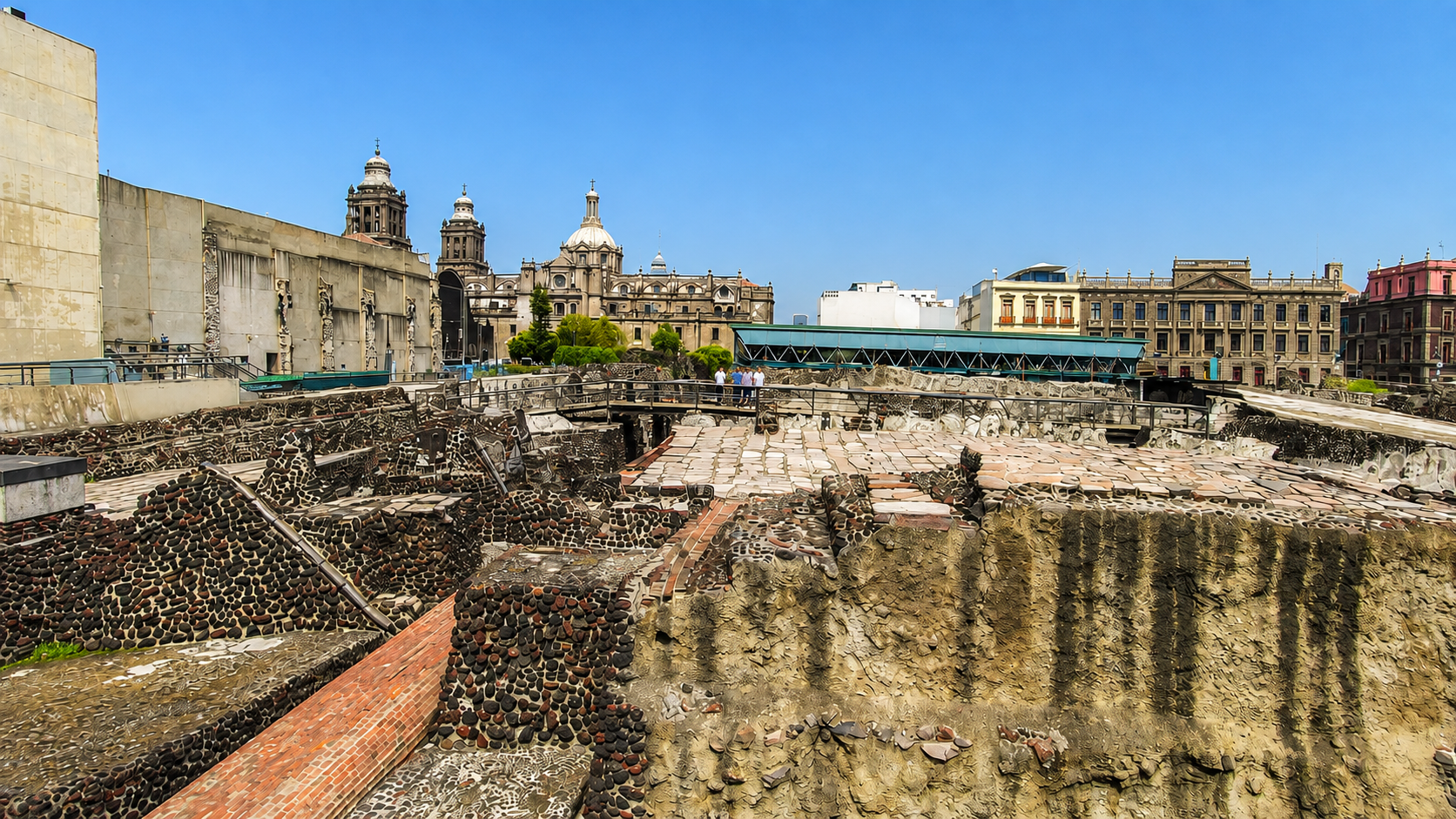
Fast-track access to Mexico City's premier Aztec archaeological museum with 7,000 ancient artifacts
Entry at the main gate and conservation fee payment.
Pre-flight briefing and sunrise ascent over the valley.
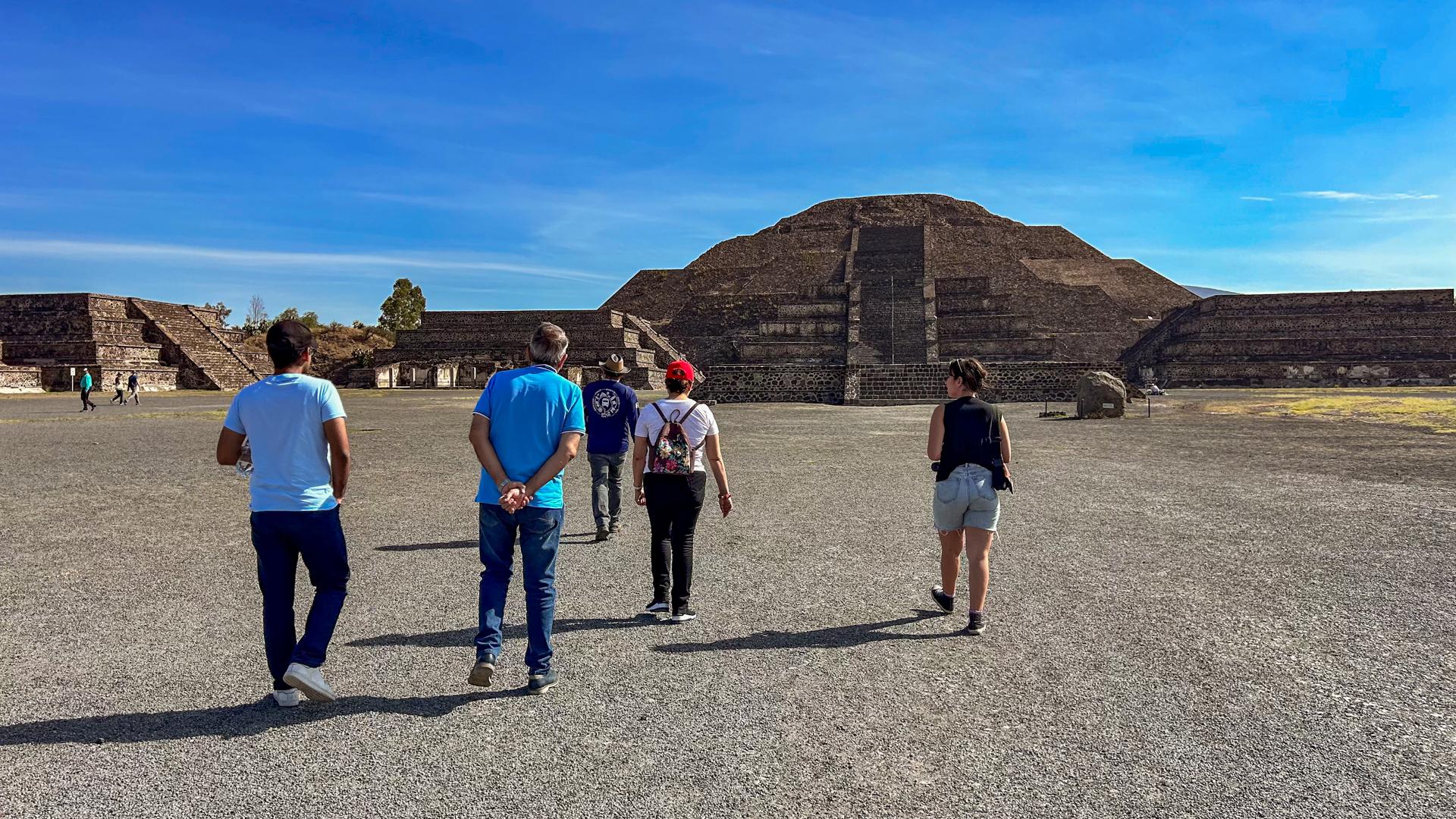
Exploring the Avenue of the Dead and major pyramids.
Viewing artifacts found within the complex.
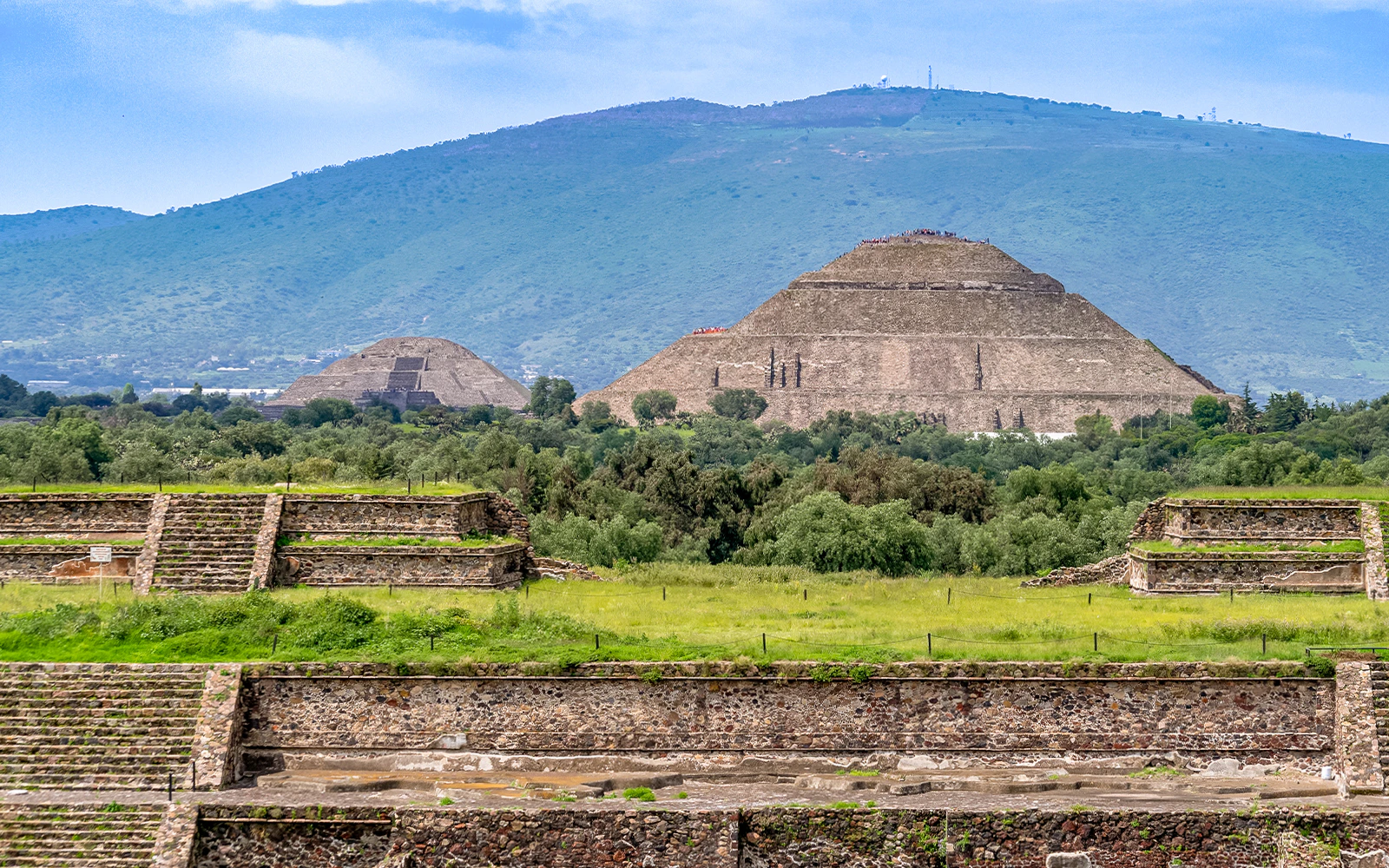
This structure stands over 60 meters high and is one of the largest in the ancient world. It faces the setting sun on specific days of the year.
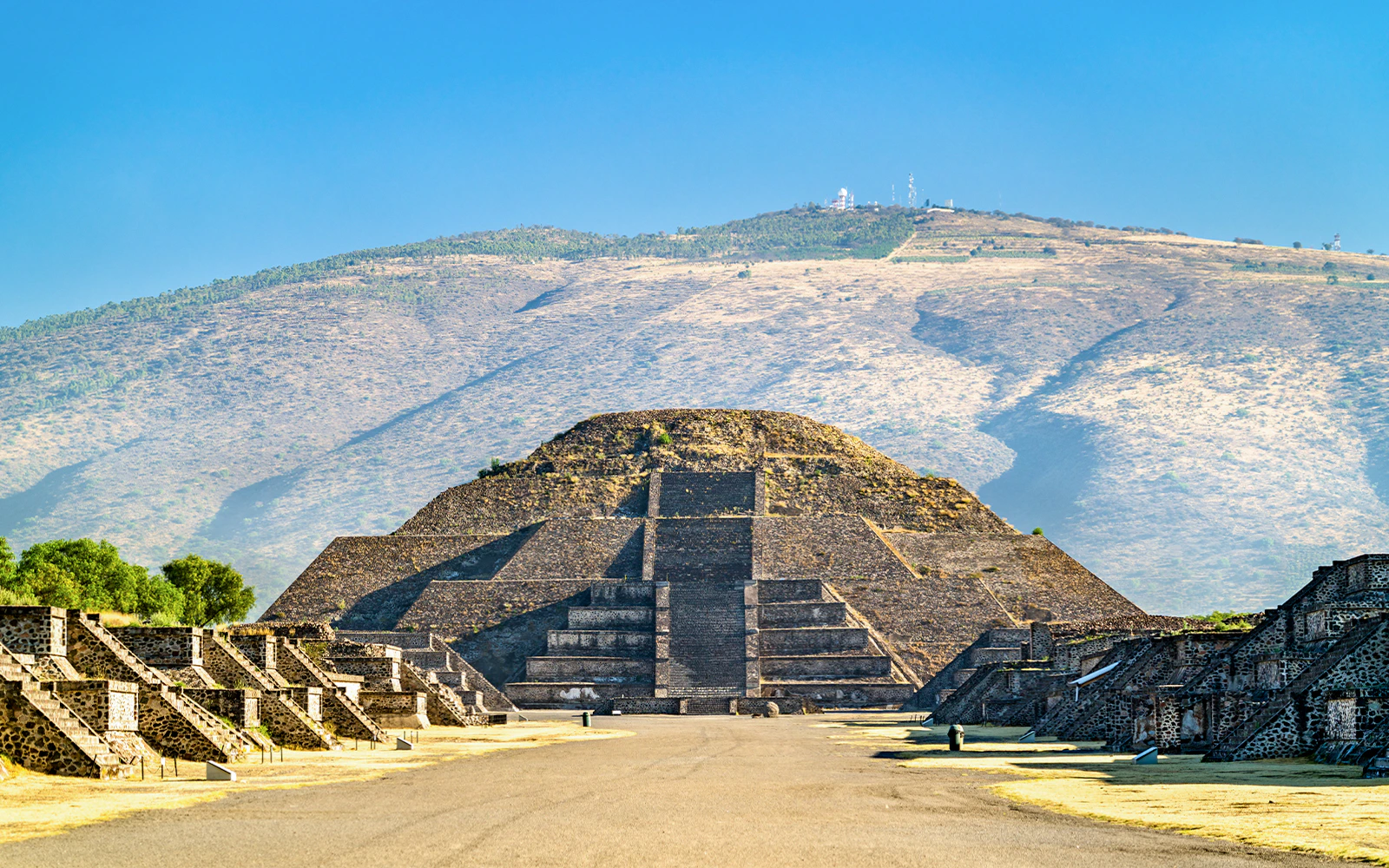
Situated at the end of the Avenue of the Dead, this pyramid provides a central vantage point for the site. Its construction reflects the surrounding mountain peaks.
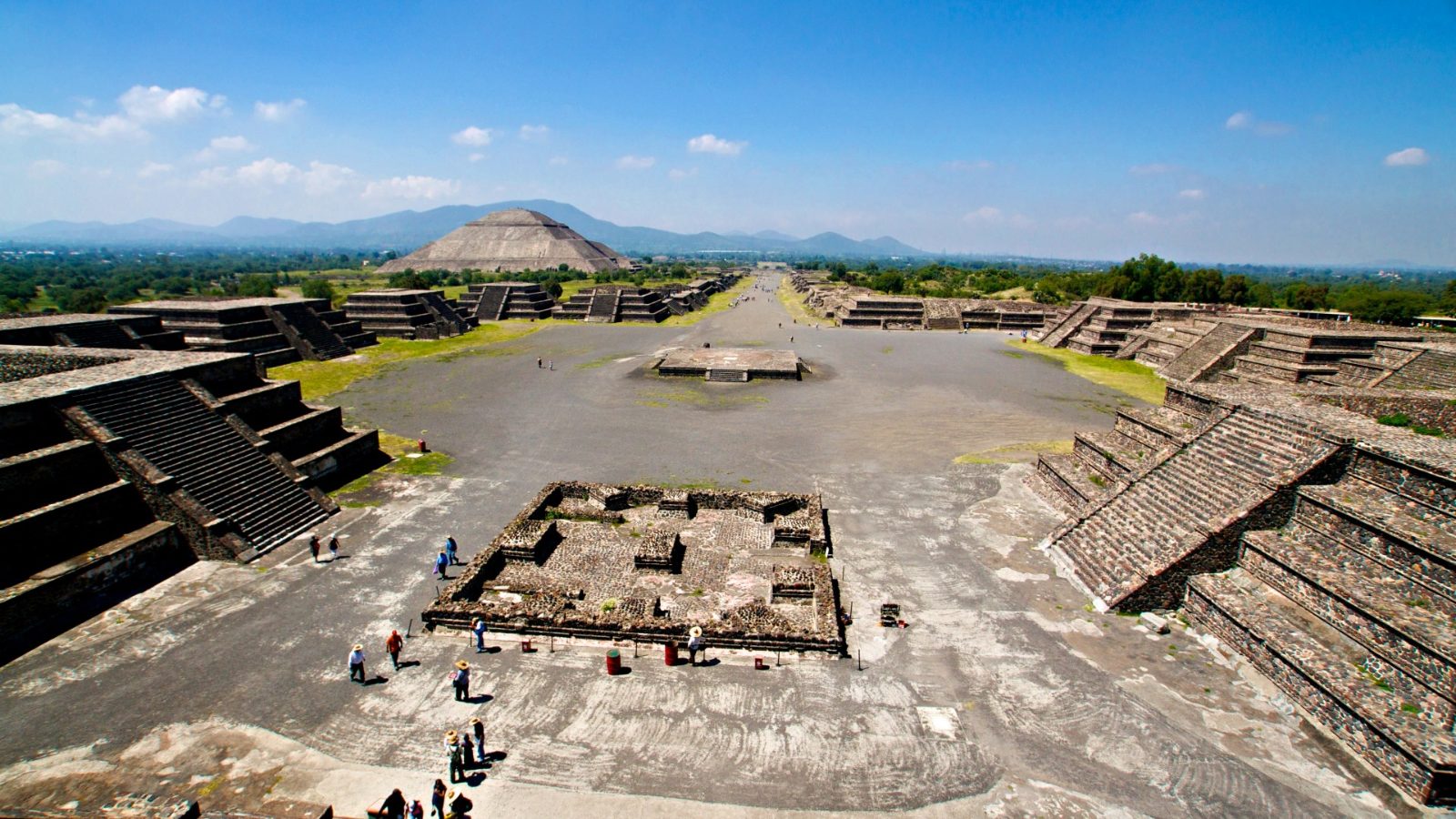
This primary thoroughfare connects the major ceremonial complexes of the city. It spans over 2 kilometers in total length.
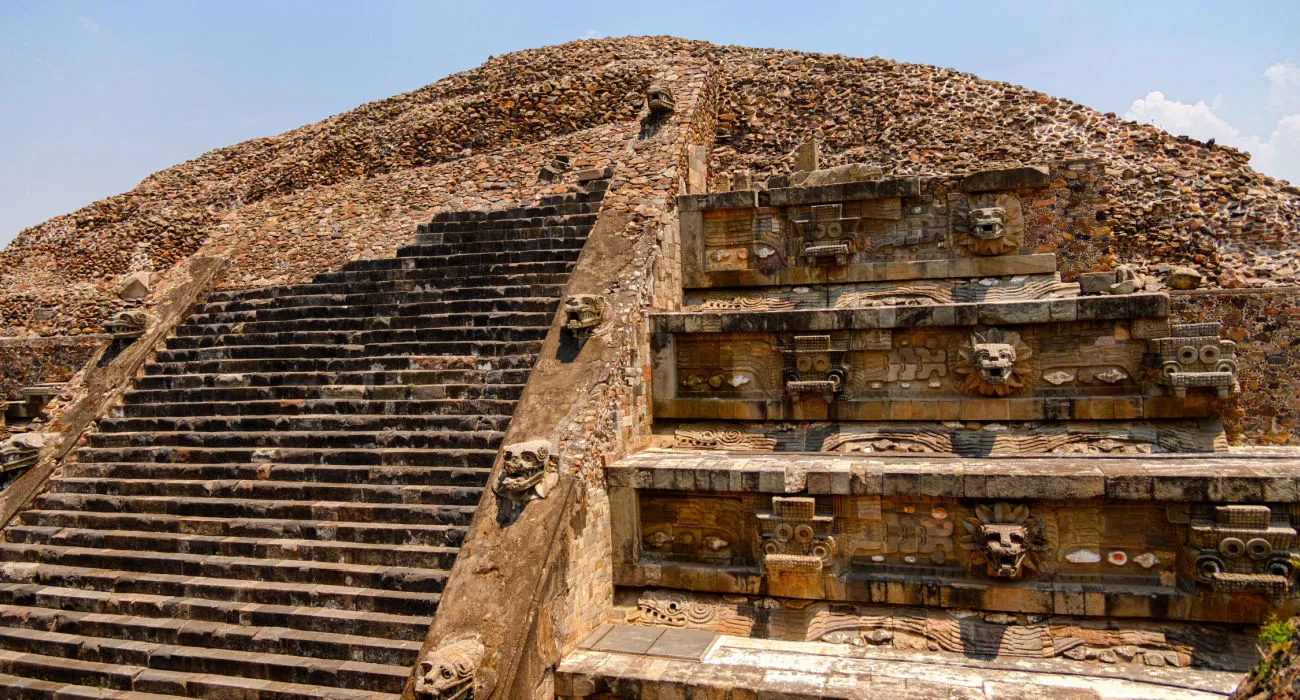
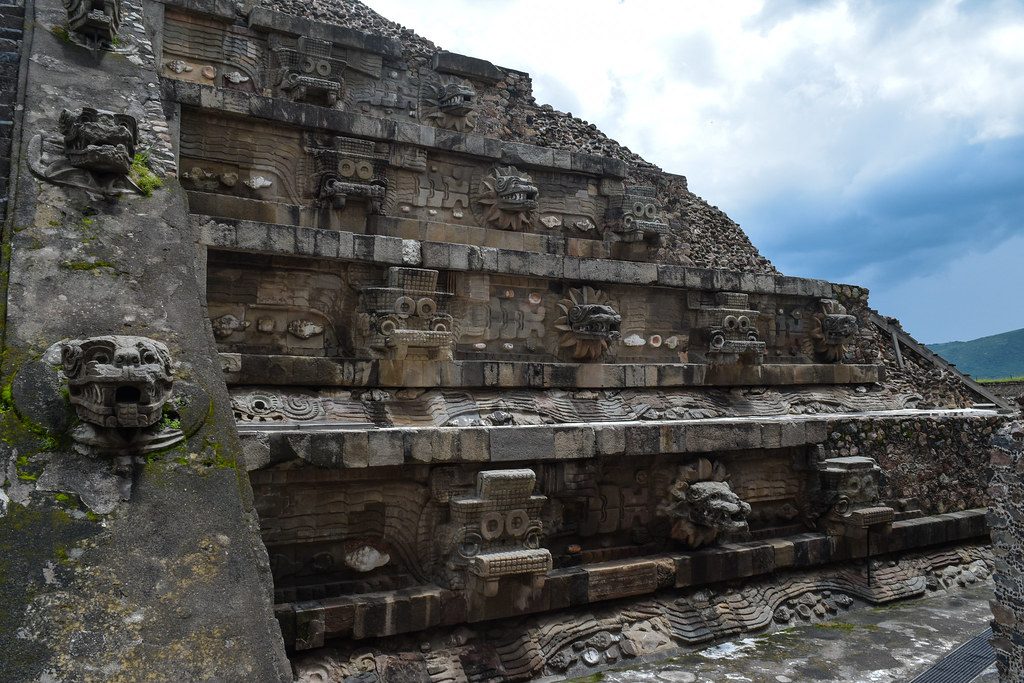
This temple features elaborate carvings of the deity Quetzalcoatl. It is located within the Ciudadela area.
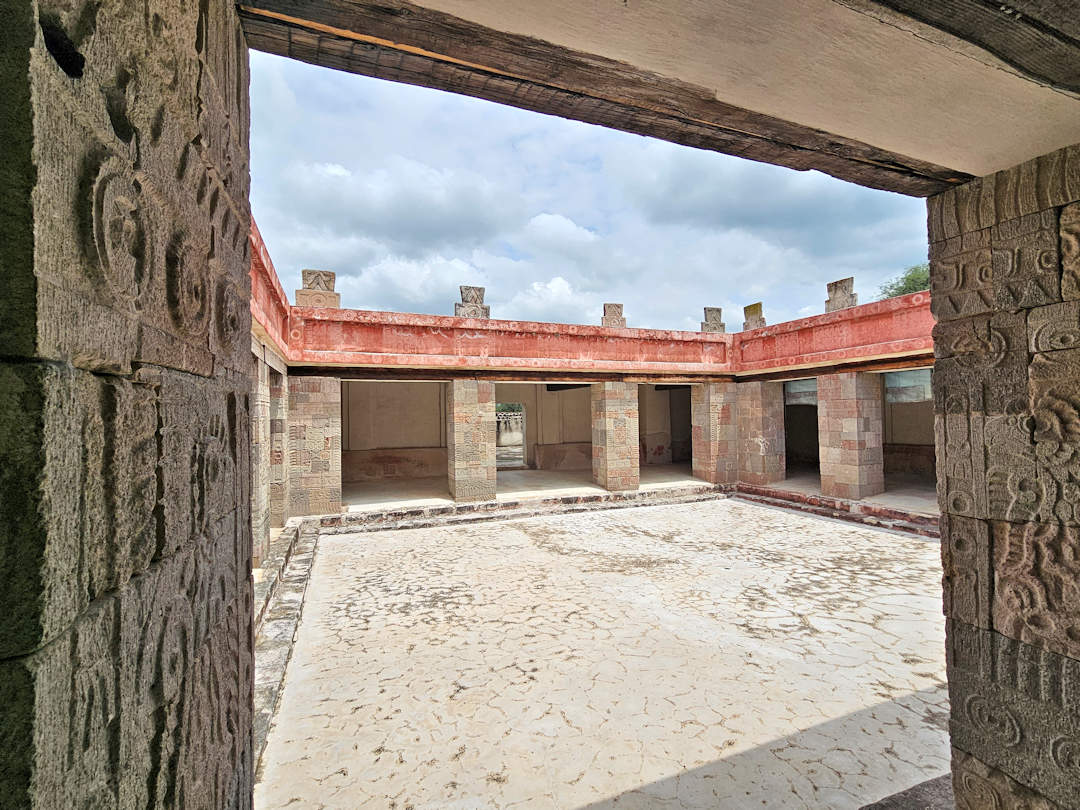
This building contains well-preserved frescoes and stone pillars. It is located near the Plaza of the Moon.
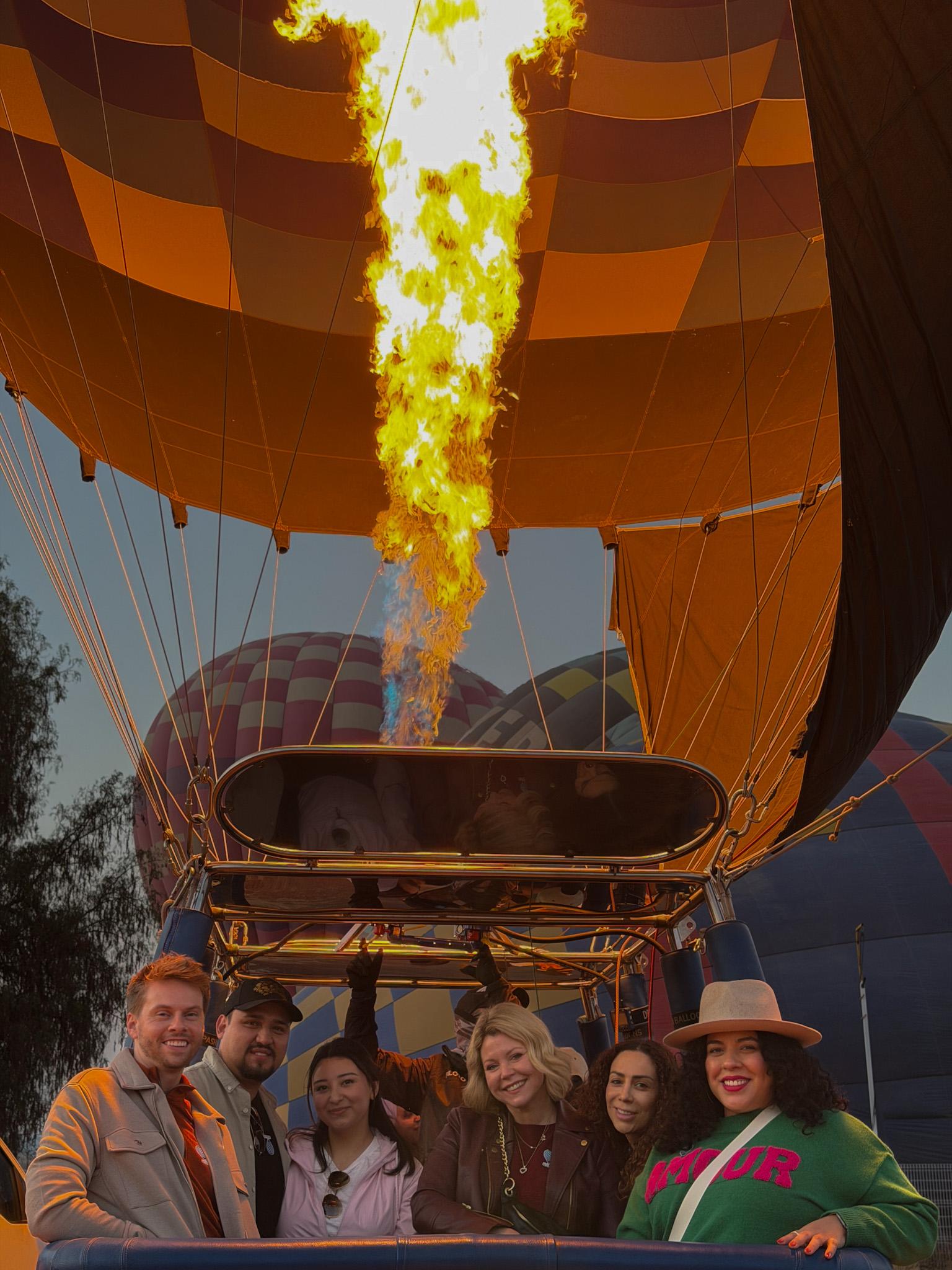
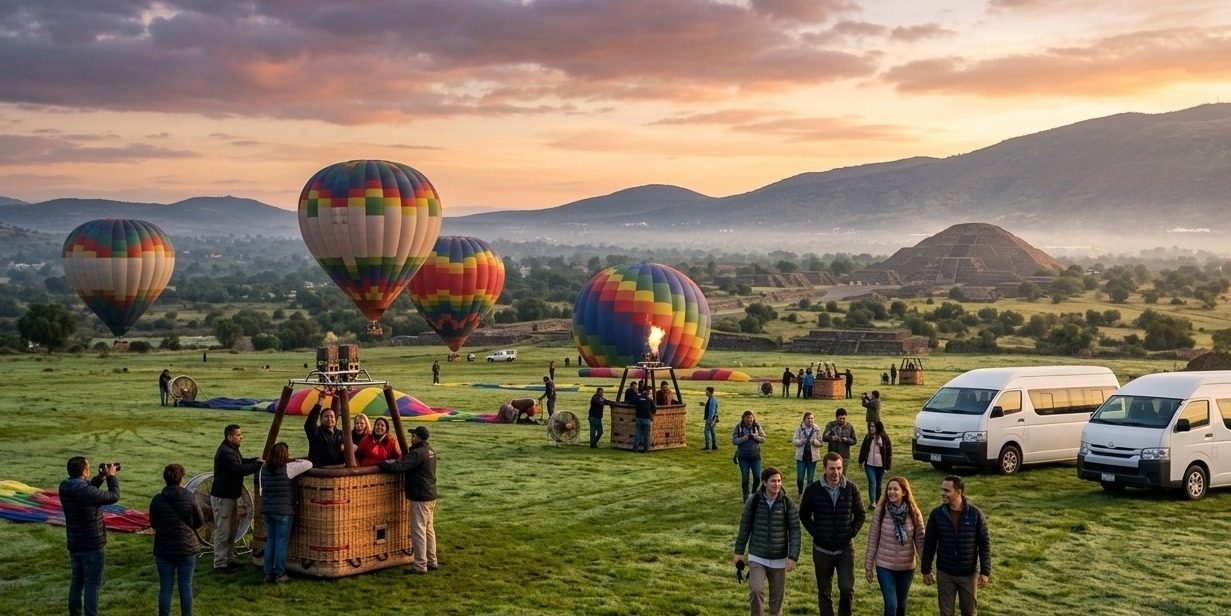
You arrive at the launch field in darkness, watching crew members inflate the balloon envelope with propane burners that roar and glow orange against the pre-dawn sky.
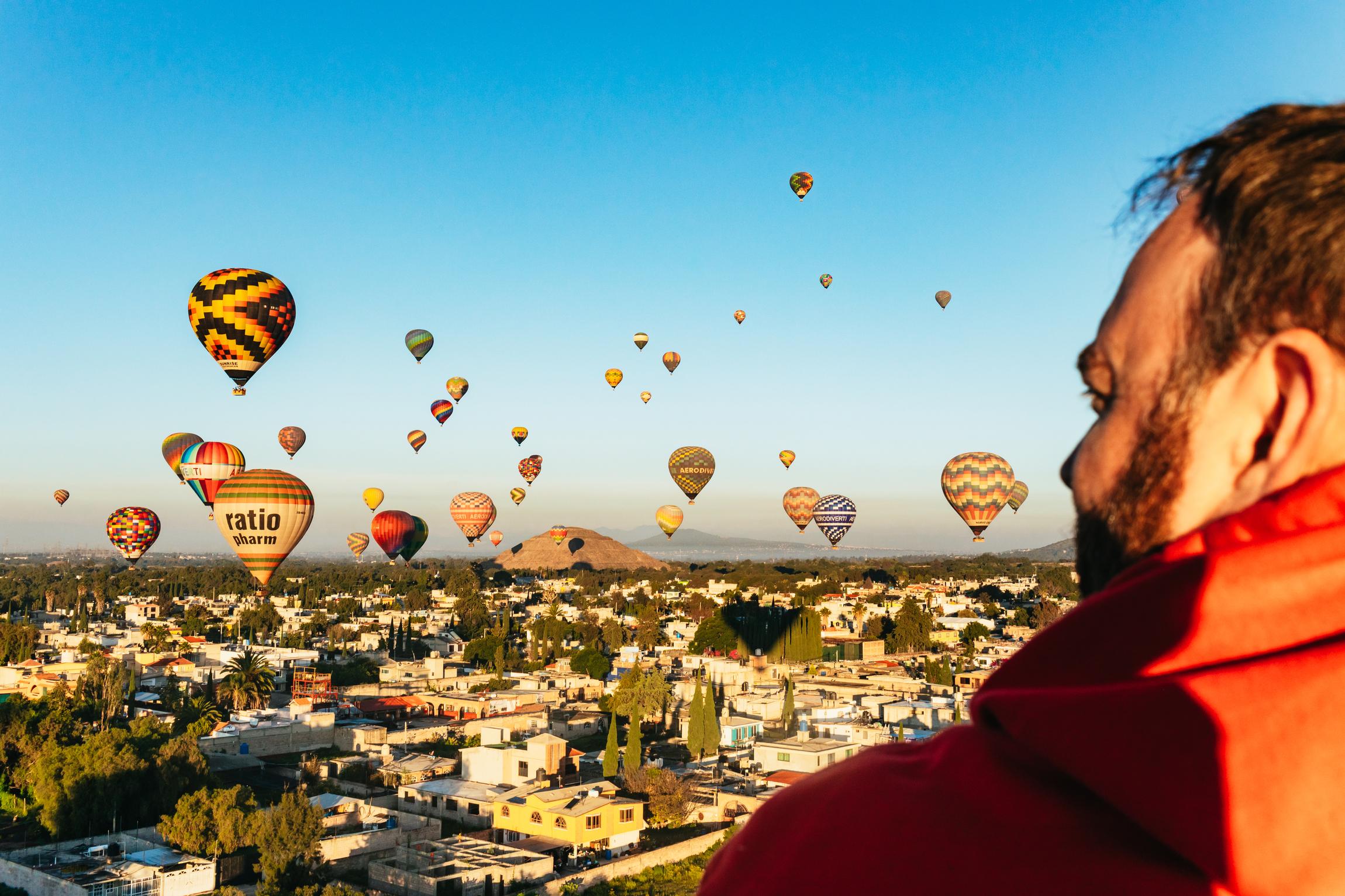
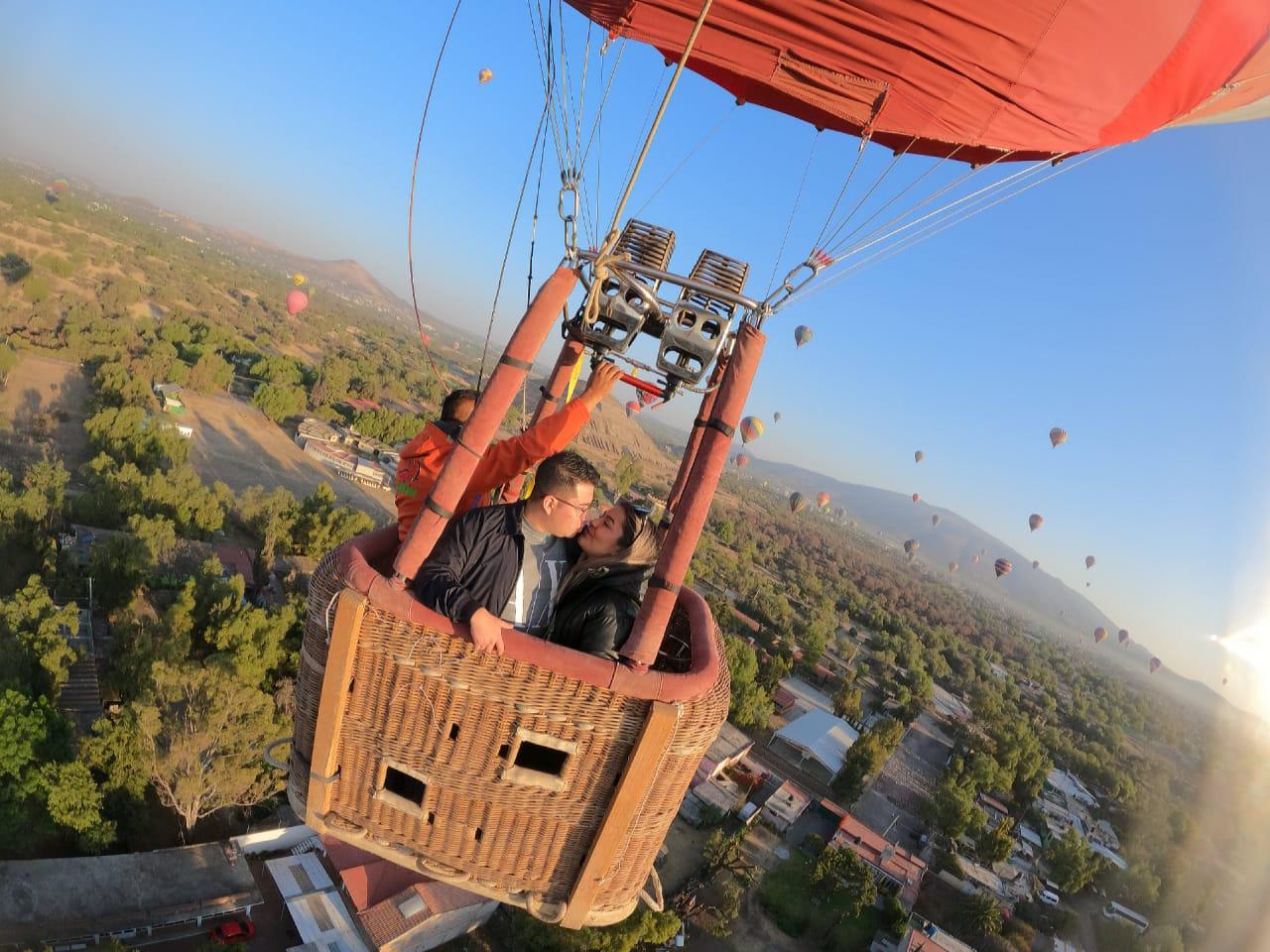
Once the fabric stands vertical, you step into the waist-high wicker basket and rise smoothly as the sun breaks the horizon behind Popocatépetl volcano, 70 kilometres southeast.
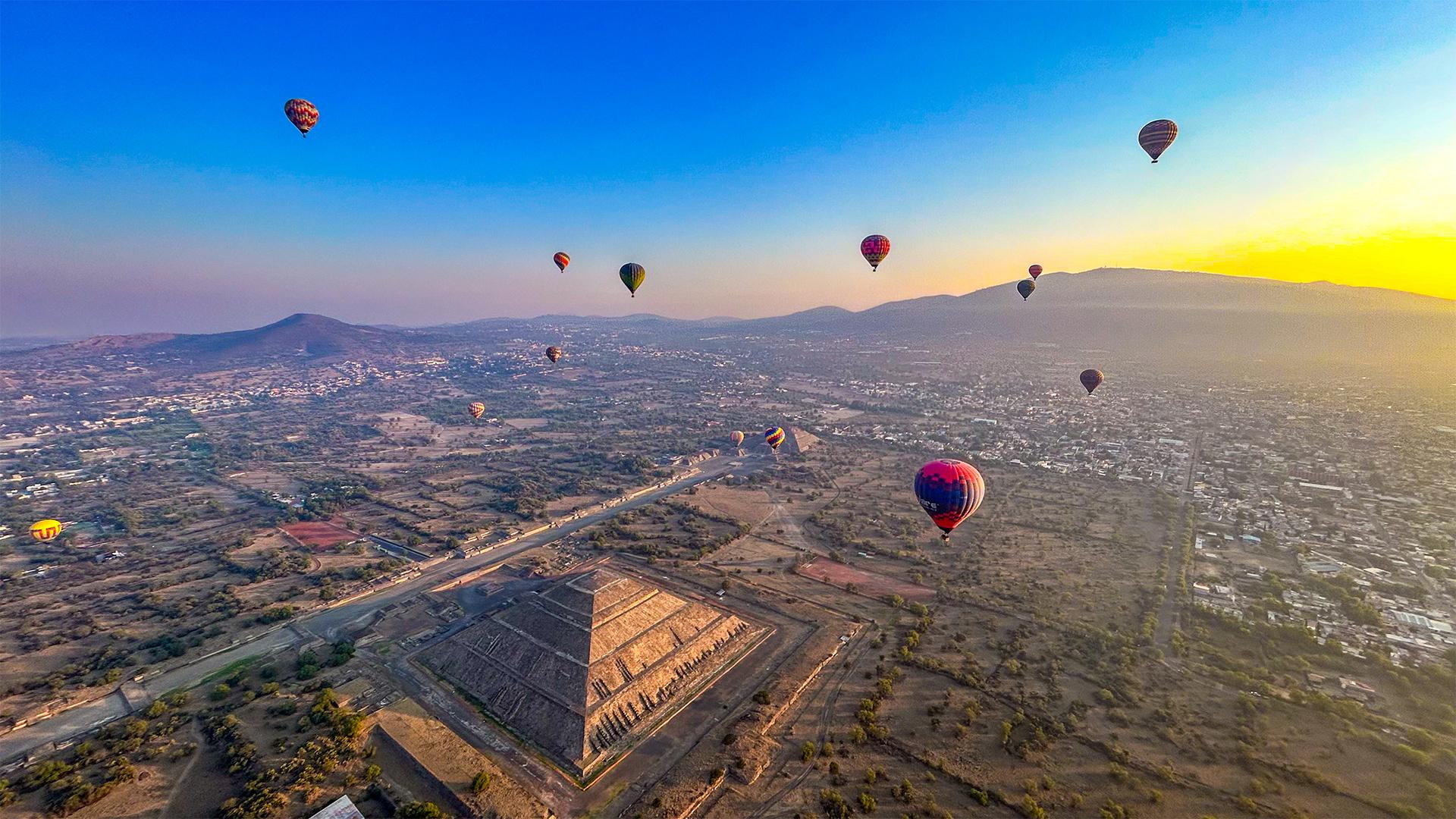
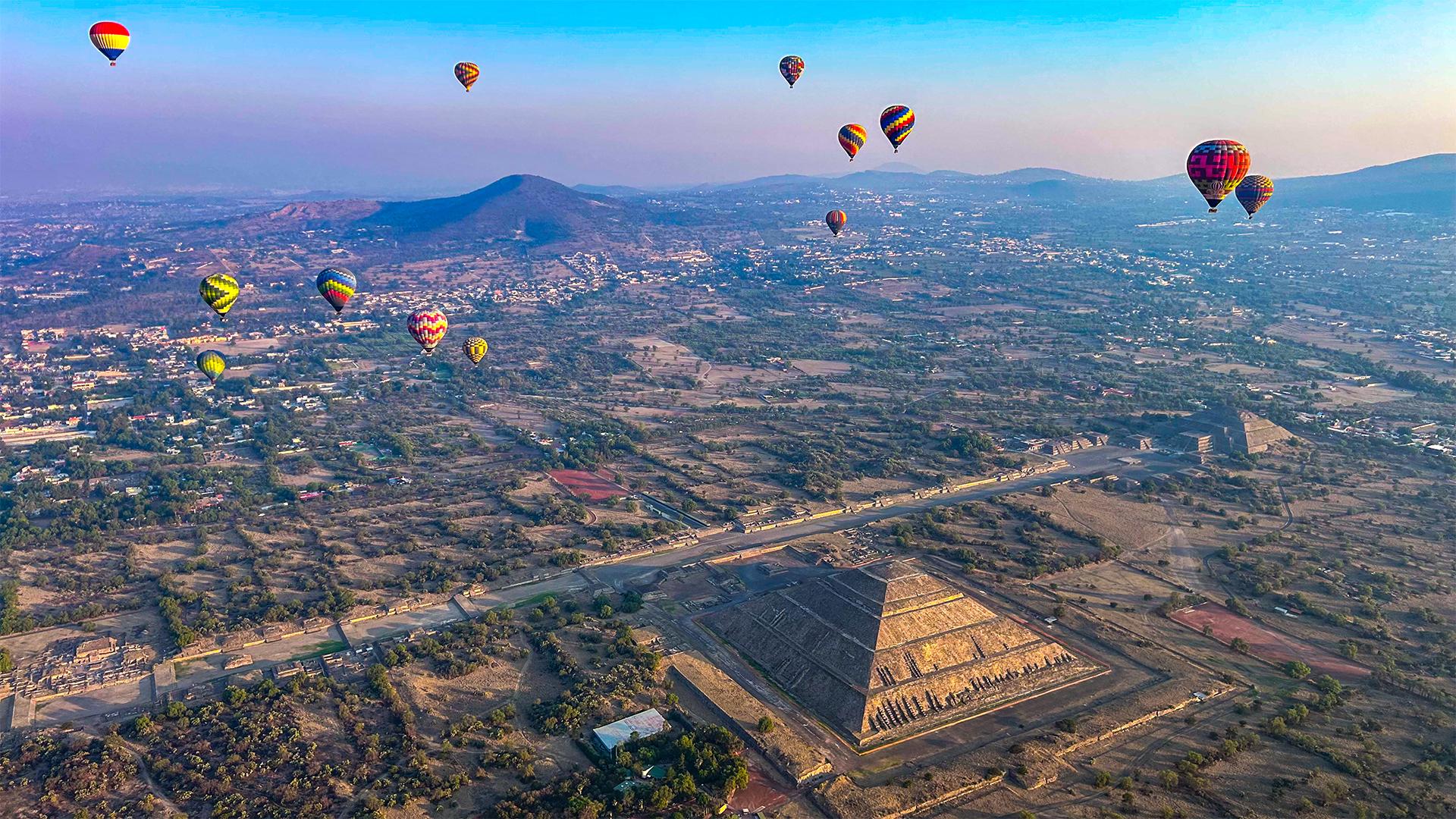
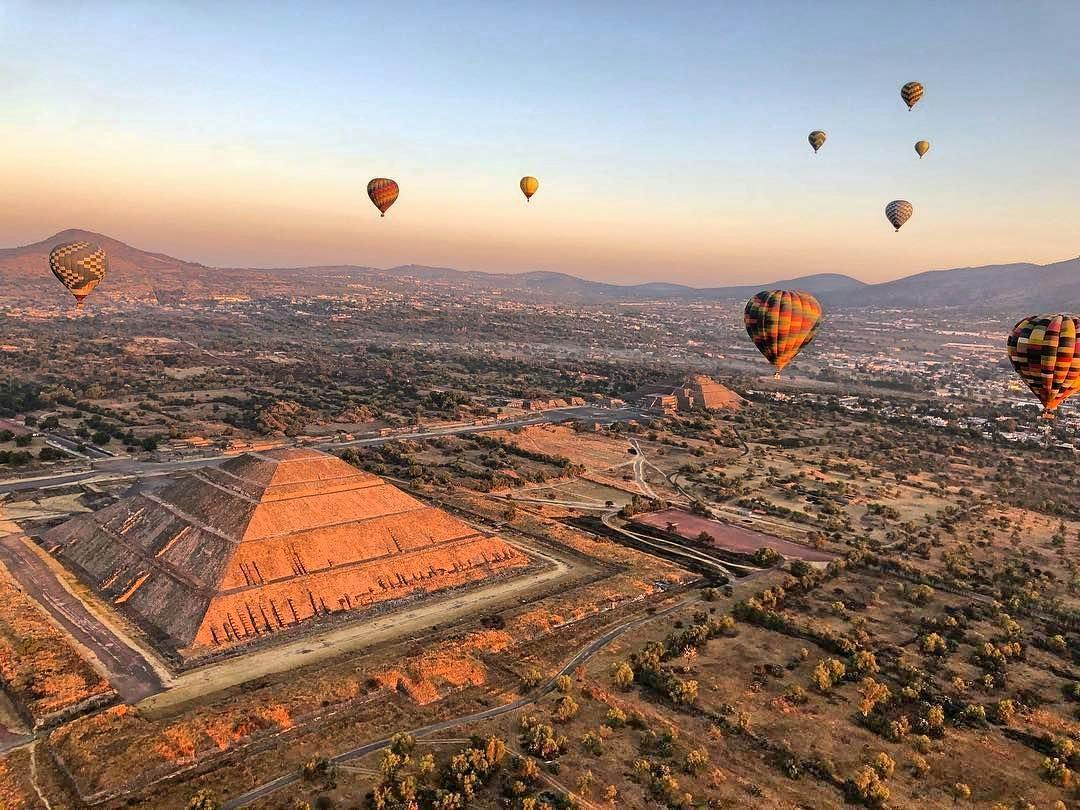
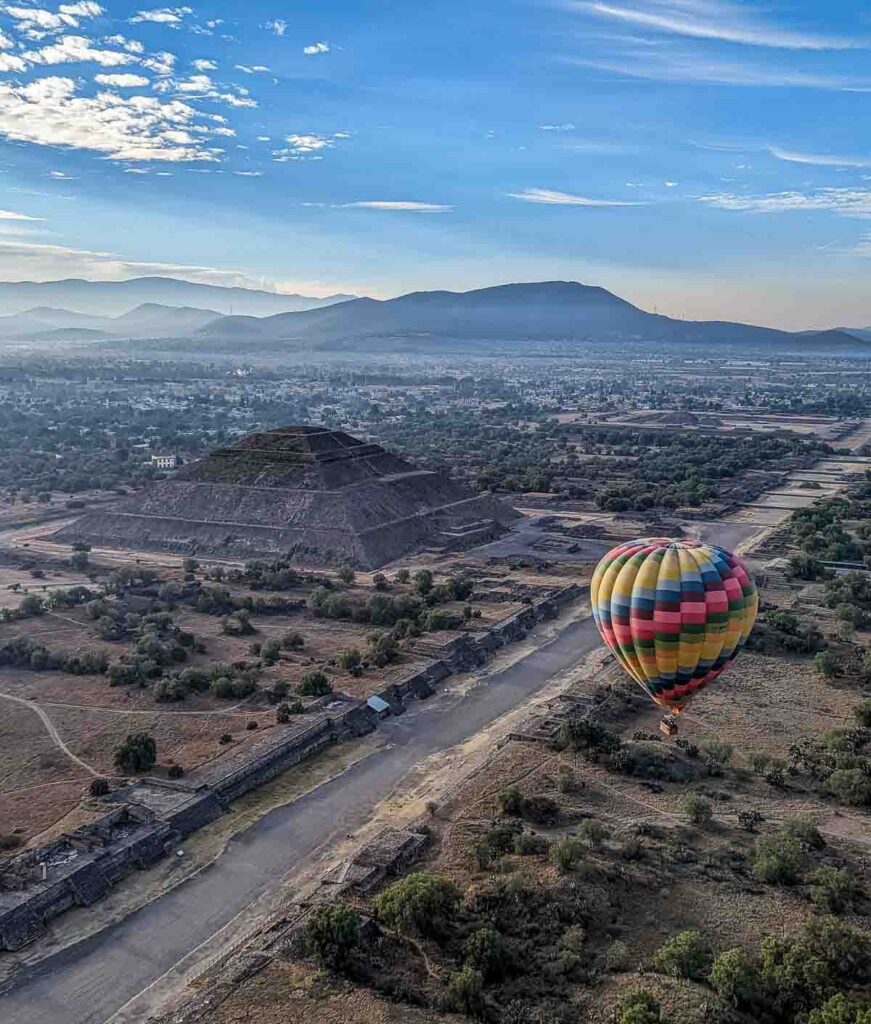
The Pyramid of the Sun appears first, its stepped silhouette casting a long shadow westward across the avenue. Your pilot adjusts altitude using short bursts of flame, and the basket rotates slowly, bringing the Pyramid of the Moon into view at the northern terminus. From 300 metres you can trace the entire ceremonial core—the Citadel complex to the south, the grid of residential compounds spreading east and west, the ancient riverbed that once supplied water to the city.
The flight lasts fifty minutes. You drift north over agricultural fields, then circle back as the wind shifts, descending gradually until the basket skims low over mesquite trees near the landing zone. Ground crew chase in a van, meeting you as the basket tips gently onto its side. After champagne and breakfast in an adjacent restaurant, you walk through the site entrance at 08:00, climbing the Pyramid of the Sun's 248 steps to the platform where you floated an hour before.
All the details about your upcoming adventure in one place
The Pyramid of the Sun rises 65 metres above the Valley of Mexico, its base covering roughly the same area as Egypt's Great Pyramid at Giza.
Built around 200 CE by a civilization whose name we do not know, Teotihuacan once housed 125,000 people across eight square miles of planned avenues, residential compounds, and ceremonial platforms. The city was abandoned by 550 CE, centuries before the Aztecs arrived and named it "the place where the gods were created."
Today Teotihuacan remains the most visited archaeological zone in Mexico, drawing over two million annual visitors to its twin pyramids and the three-kilometre Avenue of the Dead. UNESCO inscribed the site in 1987, citing its urban planning and monumental architecture as evidence of a sophisticated society that influenced Mesoamerican culture for centuries. The Pyramid of the Moon anchors the northern end of the avenue, while the Temple of the Feathered Serpent displays stone carvings of Quetzalcoatl and Tlaloc. Murals in the residential compounds show processions, mythological scenes, and trade networks that stretched to the Gulf Coast and Guatemala.
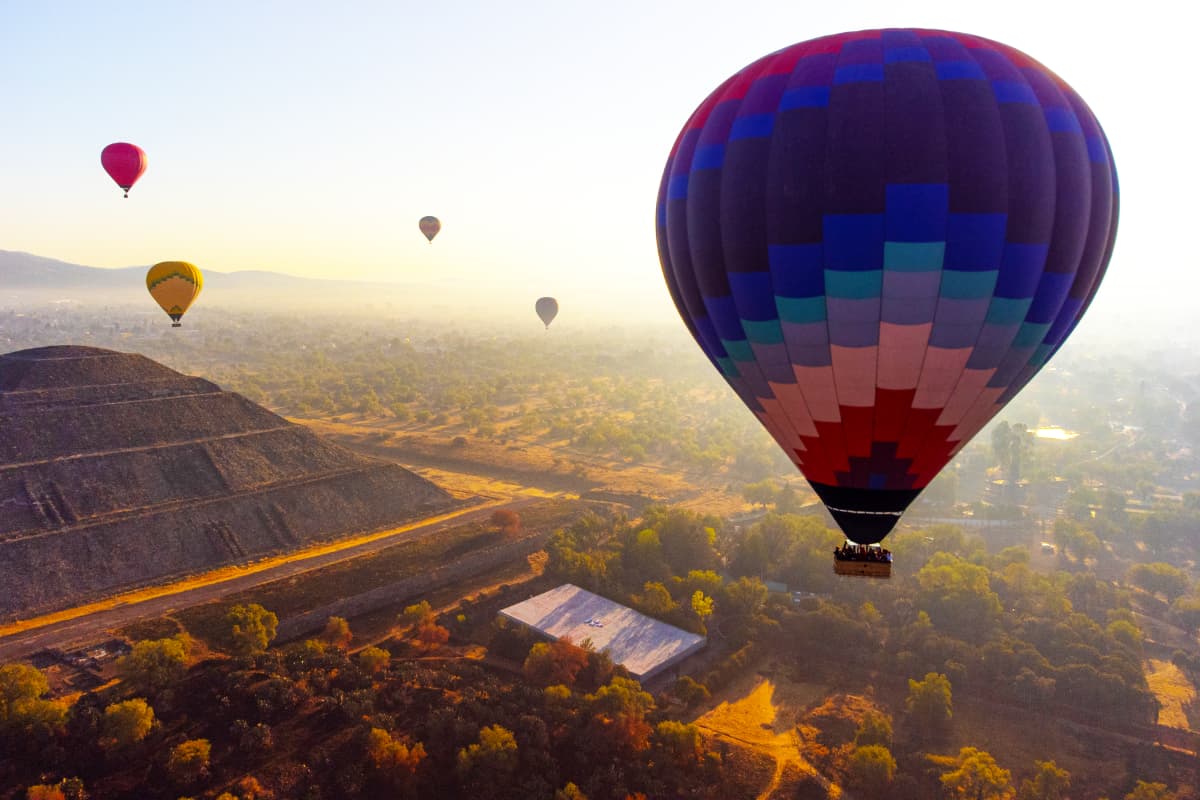
A hot air balloon Mexico City Teotihuacan flight departs before the archaeological zone opens to ground visitors, launching from fields adjacent to the pyramids in the hour before sunrise. Baskets carry eight to twelve passengers and remain aloft for 45 to 60 minutes, drifting over the Avenue of the Dead as the sun illuminates the eastern face of the Pyramid of the Sun. Pilots navigate using wind currents at different altitudes, occasionally descending low enough to see the talud-tablero architectural profiles that define Teotihuacan's temple platforms.
Most hot air balloon Mexico City Teotihuacan tours include ground transport from Mexico City hotels, departing between 04:30 and 05:00 to reach launch sites by dawn. After landing, passengers typically receive a champagne toast and breakfast before entering the archaeological zone at 08:00, when the 210 MXN conservation fee grants access to the pyramids, museums, and murals. The combination of aerial perspective and ground exploration offers spatial context that changes how visitors understand the scale and layout of pre-Columbian urban design.
The city was abandoned by 550 CE, centuries before the Aztecs arrived and named it the place where the gods were created.
Wear comfortable walking shoes with good grip for climbing the Pyramid of the Sun and Moon. Bring a hat and layers for the early morning cold when preparing for a hot air balloon mexico city teotihuacan tour.
Small backpacks are permitted, but large luggage must be left in vehicles. Security may inspect bags upon entry to ensure no prohibited items enter the archaeological zone.
Personal photography is permitted throughout the site. Commercial filming or tripod use requires a special permit from the National Institute of Anthropology and History.
The site is open to all ages, though children must be supervised on steep pyramid stairs. Hot air balloon mexico city teotihuacan tickets often specify age requirements for flight safety.
The site consists of uneven stone paths and steep inclines. Most areas are not wheelchair accessible, and the pyramid summits require significant physical exertion.
Outside food is permitted in designated rest areas. Visitors should carry sufficient water, as shade is extremely limited across the expansive site.
Opening Hours
08:00–17:00
Address
Autopista Ecatepec–Pirámides km 22+600, 55800 Teotihuacán de Arista, State of Mexico, Mexico
Accessibility
Limited terrain access to pyramid summits
Arrival
Best arrival window: 08:00–11:30
Storage
No secure luggage lockers available
Site
Archaeological zone and museums included
Car · 60 min · Toll costs vary
Follow the Autopista Ecatepec–Pirámides for direct access.
Public transport · 90 min · Affordable
Buses depart from Terminal del Norte in Mexico City.
Full refunds are typically available if canceled 24 hours prior to the scheduled flight. The 210 MXN conservation fee is included in total booking costs.
Recommended time
4-6 hours
A comprehensive hot air balloon mexico city teotihuacan experience requires early planning to balance aerial views with a ground-level exploration of the site. Following your flight, allocate several hours to traverse the Avenue of the Dead and climb available structures before the afternoon sun intensifies. Securing hot air balloon mexico city teotihuacan tickets in advance ensures a seamless transition into the archaeological zone, where crowds increase significantly as tour buses arrive from the capital. Exploring the site allows visitors to witness these ancient Mesoamerican landmarks while managing energy levels throughout the morning.
Crowd levels through the day
Weather · crowds · average price — dots go green to amber to red as each metric rises.
March offers mild temperatures perfect for sunrise flight visibility.
Expect afternoon rain showers, so early morning visits are crucial.
September provides cooler air and fewer crowds compared to the equinox periods.
Clear blue skies create ideal photography conditions for Mexico City landmarks.
Arrive between 08:00–11:30 to maximize time before heat peak.
Wear sturdy walking shoes for the rocky terrain and steep stairs.
Apply sunscreen before your hot air balloon mexico city teotihuacan flight starts.
Use a physical map to locate the main pyramids efficiently.
Book your hot air balloon mexico city teotihuacan tours in advance for priority check-in.
Autopista Ecatepec–Pirámides km 22+600
Designated meeting point for guided hot air balloon mexico city teotihuacan tours.
Get directionsTeotihuacan rose between 100 BCE and 250 CE in the northeastern Basin of Mexico, eventually covering twenty square kilometers and housing perhaps 125,000 inhabitants. The city's founders, whose ethnic identity remains contested, laid out a grid aligned 15.5 degrees east of true north, organizing residential compounds, plazas, and monumental pyramids along a central avenue now called the Avenue of the Dead. The Pyramid of the Sun, completed around 200 CE, stands sixty-five meters tall and required an estimated one million cubic meters of fill; workers transported volcanic rock and adobe without draft animals or metal tools. The Pyramid of the Moon, finished by 350 CE, anchored the avenue's northern terminus and framed the sacred mountain Cerro Gordo beyond. Murals inside elite compounds depicted jaguars, coyotes, feathered serpents, and processions of priests, painted with mineral pigments that survived because the city burned rather than eroded. By 550 CE Teotihuacan controlled trade routes stretching to the Maya lowlands and the Gulf Coast, exchanging obsidian blades and green serpentine for cacao and jade. Yet around 550–650 CE the city center burned in a coordinated conflagration that destroyed temples and administrative buildings along the avenue while sparing most residential zones, suggesting internal revolt rather than foreign invasion. Population dispersed to satellite towns, and by 750 CE Teotihuacan held fewer than thirty thousand residents. The Aztecs, arriving in the Basin of Mexico seven centuries later, found the ruins overgrown and named the site Teotihuacan—"place where the gods were created"—believing the pyramids were divine tombs. Spanish colonizers in the sixteenth century documented the monuments but conducted no excavation until the late nineteenth century, when Leopoldo Batres cleared the Pyramid of the Sun's façade between 1905 and 1910, controversially removing the outer layer to expose an earlier construction phase. Modern hot air balloon mexico city teotihuacan tours lift passengers at dawn to view the grid's geometric precision, revealing how the ancient planners aligned residential blocks, ceremonial platforms, and water channels across the volcanic plain. UNESCO inscribed the site in 1987, and ongoing excavations beneath the Pyramid of the Feathered Serpent continue to yield offerings of jade figurines, obsidian blades, and sacrificial burials that clarify the city's ritual economy and political structure.
Settlement begins in the Basin of Mexico, with early platform mounds constructed along a north-south axis.
The Pyramid of the Sun reaches completion, requiring one million cubic meters of fill transported without wheeled vehicles or draft animals.
The Pyramid of the Moon is finished at the Avenue of the Dead's northern end, framing the sacred mountain Cerro Gordo.
Teotihuacan reaches its demographic peak, controlling obsidian and serpentine trade networks extending to Maya territories and the Gulf Coast.
Coordinated fires destroy temples and elite compounds along the central avenue, triggering population dispersal and political collapse.
Aztec pilgrims visit the ruins, naming the site Teotihuacan and attributing its construction to divine beings rather than human labor.
Leopoldo Batres directs excavation of the Pyramid of the Sun, controversially removing the outer façade to expose earlier construction.
UNESCO inscribes Teotihuacan on the World Heritage List, recognizing its urban planning and monumental architecture as globally significant cultural heritage.
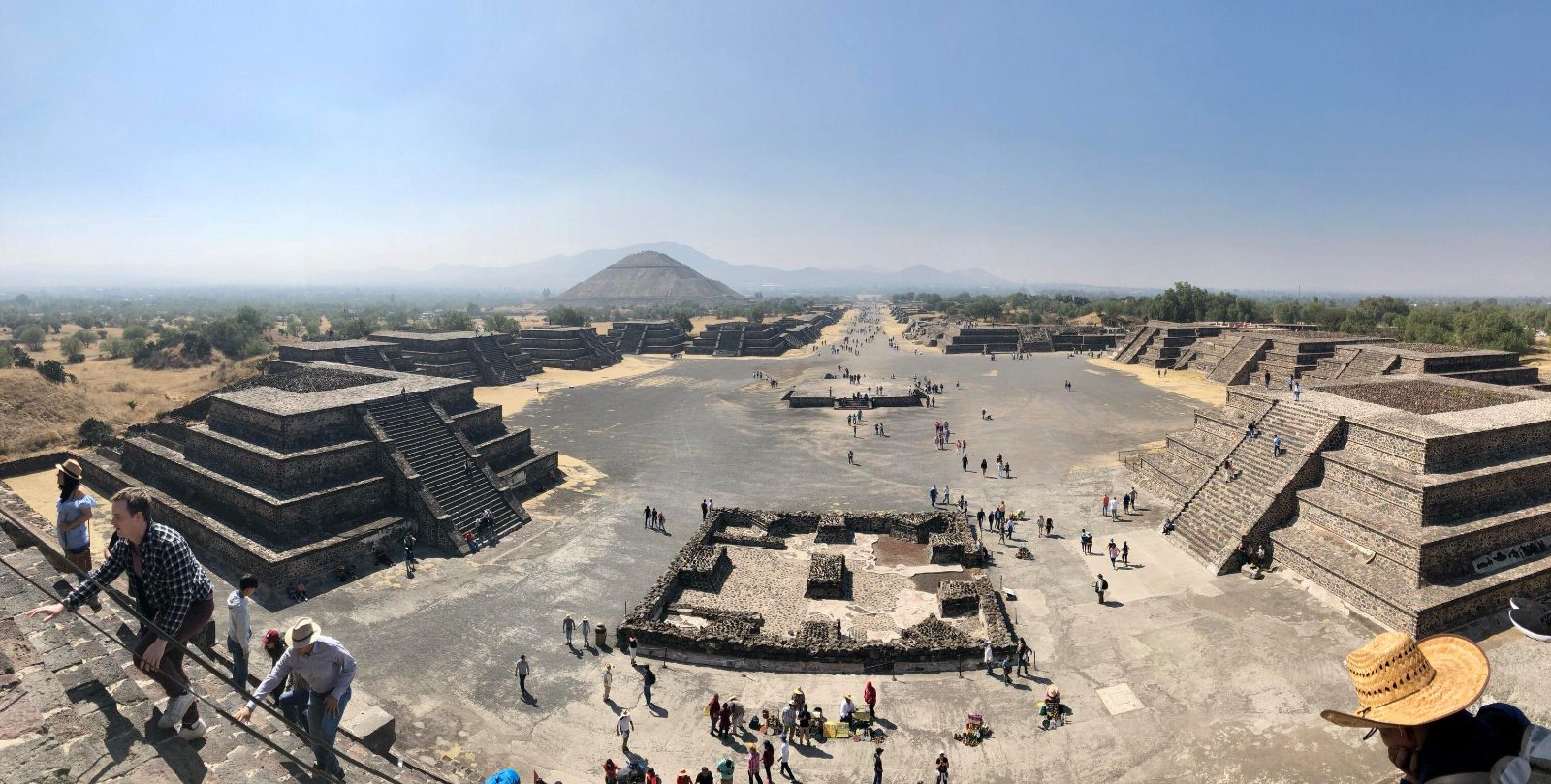
Stand at the top platform to capture the sprawling Calzada de los Muertos and the surrounding valley floor. This vantage point provides the most expansive perspective of the archaeological complex.
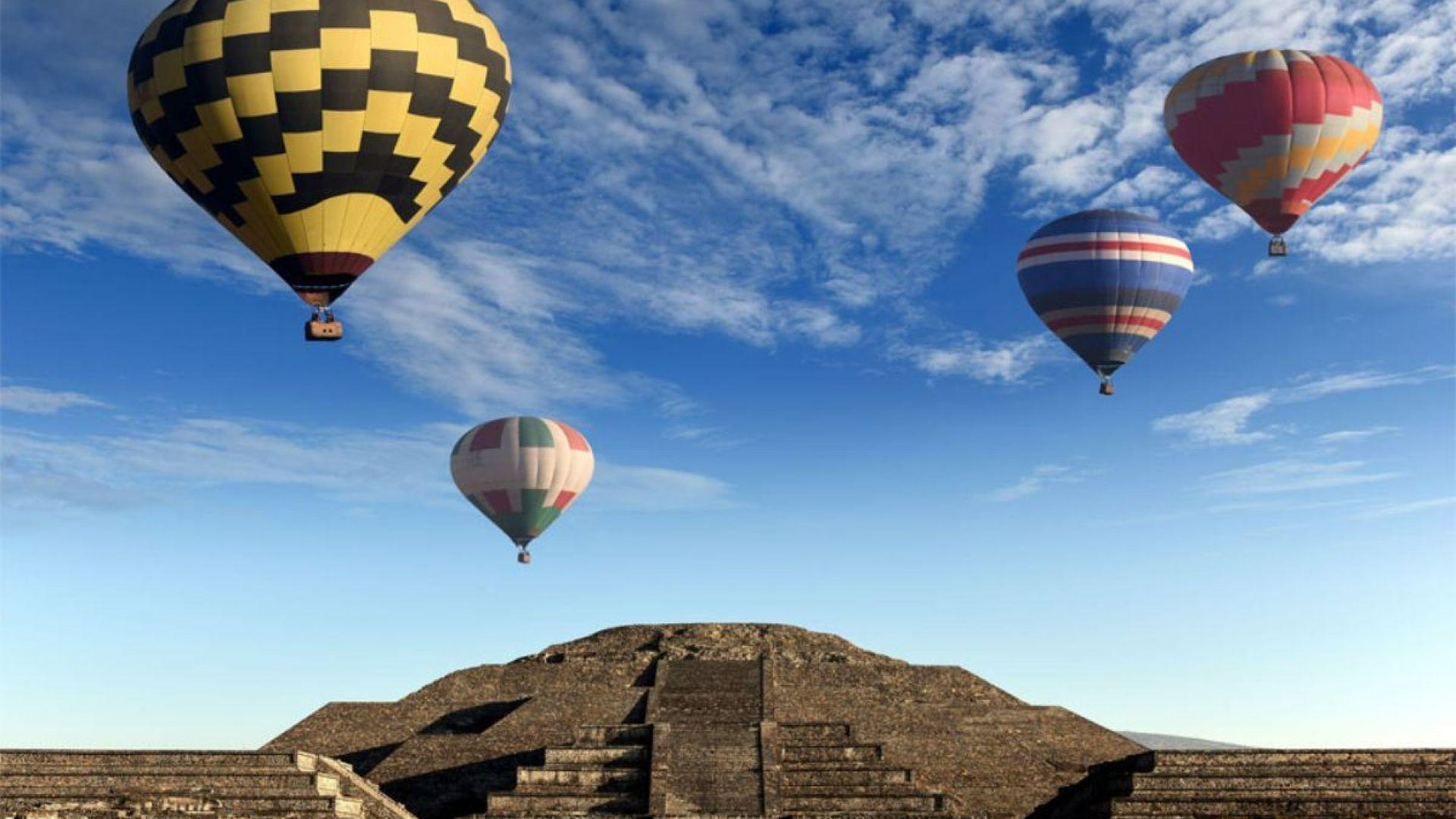
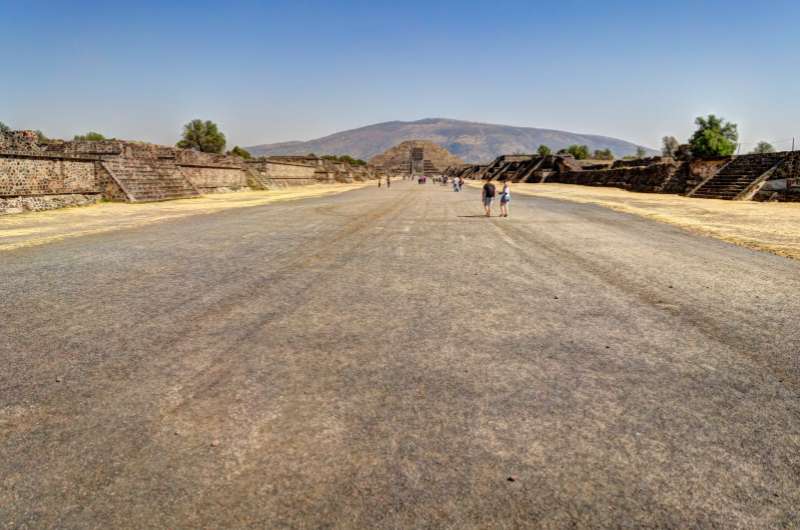
Position your camera at street level looking north toward the Pyramid of the Moon to frame the symmetrical stone structures. It is the best spot to capture the scale of a hot air balloon mexico city teotihuacan as it drifts over the ancient basalt monuments.
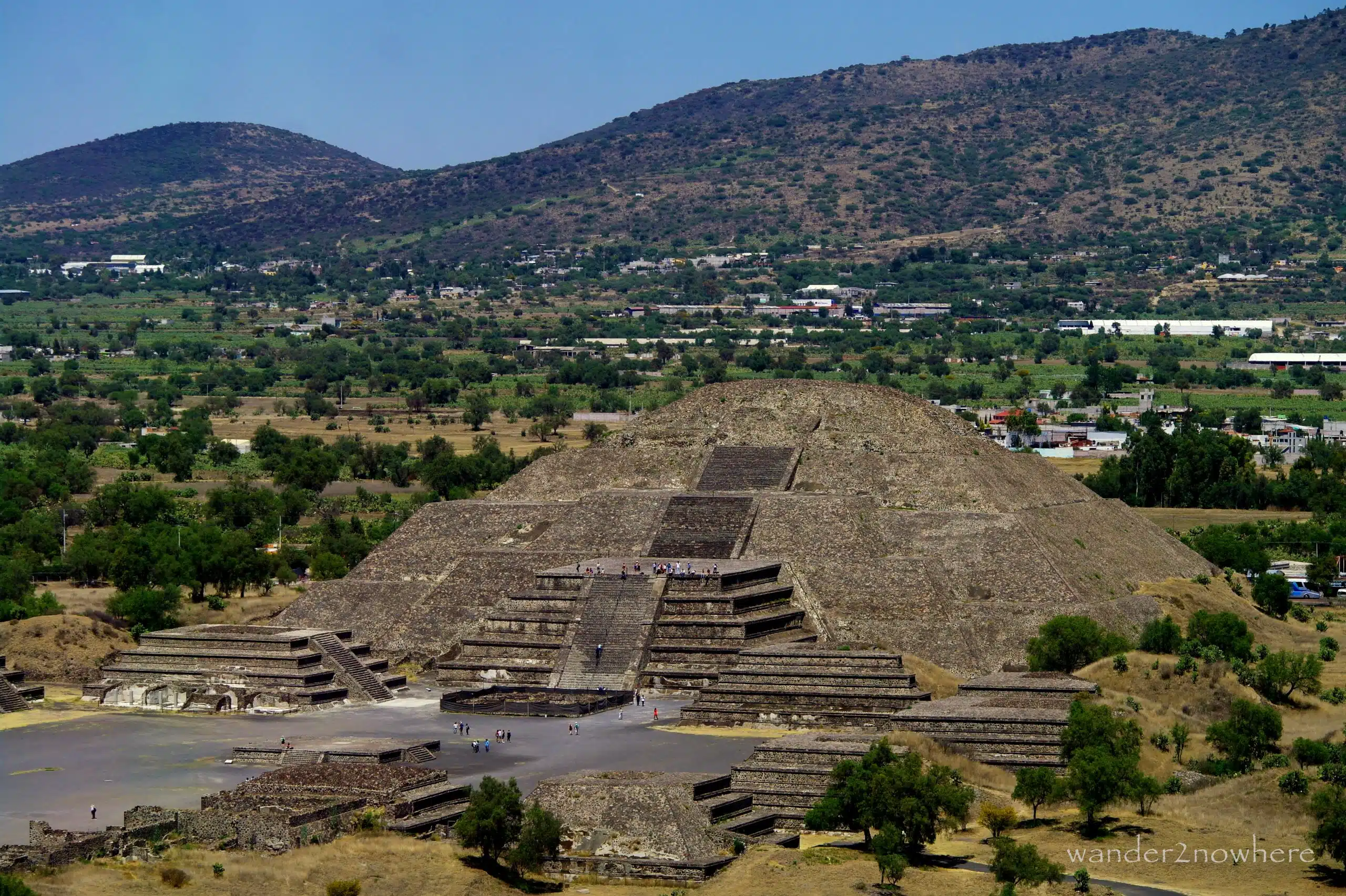
Use the mid-level platforms to capture the complex foreground of smaller temples leading the eye toward the primary pyramids. This angle emphasizes the geometric precision of the ancient city layout.
Capturing the early morning liftoff provides a unique bird-eye perspective of the entire basin before your hot air balloon mexico city teotihuacan tour begins. This angle shows the contrast between the arid landscape and the colorful equipment.
Focus on the intricate stone carvings and relief sculptures found in this sunken plaza. It offers a detailed architectural shot that differs from the wider landscape images provided by your hot air balloon mexico city teotihuacan tickets.
Planning a hot air balloon mexico city teotihuacan trip requires careful preparation due to the expansive archaeological site. Navigating the ancient ruins with children involves significant walking across uneven terrain, so selecting the right hot air balloon mexico city teotihuacan tours is essential for a manageable experience.
The volcanic rock and uneven paths make strollers impractical for most of the site, so a carrier is recommended for younger children. Navigating the archaeological zone is much easier when your hands are free to help little ones.
School-aged children typically engage better with the scale of the pyramids and the history of this Mexico landmark. Younger kids may find the long walks tiring, making it important to pace your visit when using hot air balloon mexico city teotihuacan tickets.
There are limited baby-change facilities available, so bring all necessary supplies with you for the day. Plan for basic restroom stops before entering the main plazas to avoid long walks back.
Aim to arrive during the best arrival window of 08:00–11:30 to ensure your family explores before the heat intensifies. Booking a structured hot air balloon mexico city teotihuacan tour often helps keep your morning schedule predictable.
Pack plenty of water and snacks, as options inside the archaeological zone are sparse. Carrying extra provisions helps maintain energy levels throughout the morning.
Dining options near the archaeological site are centered around traditional Mexican cuisine, perfect for those concluding a hot air balloon mexico city teotihuacan adventure. Most visitors find these establishments located just outside the gates, offering hearty breakfasts after their early morning Teotihuacán sunrise flight.
Located in a natural cavern near the site, this venue offers a unique atmosphere for a post-flight meal. It is popular for traditional regional dishes and requires reservations for those using hot air balloon mexico city teotihuacan tours.
A short walk from the entrance, this spot provides a comfortable setting for authentic plates like mole and barbacoa. It serves as a convenient stop after securing your hot air balloon mexico city teotihuacan tickets.
This restaurant features local ingredients and a relaxing garden space perfect for unwinding. It is a frequent choice for groups finishing a hot air balloon mexico city teotihuacan tour during the best arrival window.
Everything you need to know for your journey
The site is open daily from 08:00–17:00, perfect for planning your hot air balloon mexico city teotihuacan visits.
While there is no strict age limit, children must be tall enough to see over the basket edge for balloon tours.
Tripods are restricted at the site; you may need a permit for commercial hot air balloon mexico city teotihuacan footage.
The entrance fee is 210 MXN per person, which covers the archaeological zone and museums.
Arriving during the 08:00–11:30 window is the best way to avoid the midday heat and peak daily crowds.
No, pets are not allowed inside the archaeological complex during your hot air balloon mexico city teotihuacan tour.
There are basic food stalls available, but bringing your own water is recommended.
Take a bus from Terminal del Norte or drive via the Autopista Ecatepec–Pirámides for the easiest arrival.
Full refunds are typically offered 24 hours in advance for most hot air balloon mexico city teotihuacan tickets.
Yes, you can combine your balloon flight with a walking tour of the nearby Pyramid of the Sun and Moon.
The largest structure on site, visible during any hot air balloon mexico city teotihuacan tour.
Located at the northern end of the Avenue of the Dead.
Famous for intricate stone carvings and historical significance.
Houses ceramics and tools discovered at the city site.
Comfortable lodging located steps from the archaeological zone.
Simple accommodations with convenient access to entrance gates.
Multiple boutique options available in the town of San Juan Teotihuacán.
Join thousands of happy travelers who have discovered this incredible experience
Book Your Experience Now